
Adani’s downfall – how a leading member of India’s Billionaire Raj fell victim to a stock market rout
YAN ISLAM | In 2018, James Crabtree, wrote a tome on India entitled ‘The Billionaire Raj’. His concern was that India, characterized… Read More
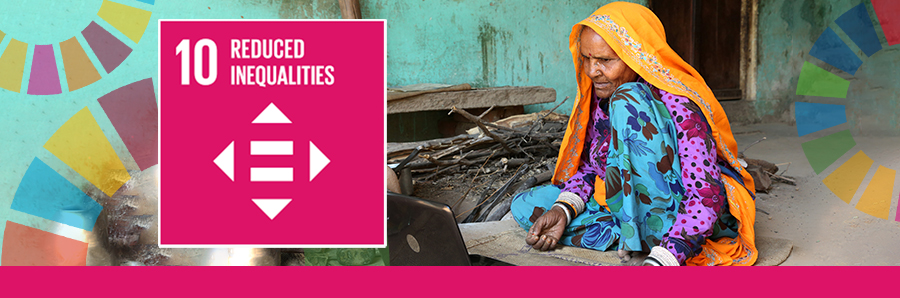
Inequality poses a threat to sustained social and economic progress, hampers poverty reduction, and erodes people’s well-being. To address both within-country and between-country disparities, it’s essential to ensure fair resource distribution, invest in education and skill development, implement social safety nets, combat discrimination, support marginalised groups, and promote international cooperation for equitable trade and financial systems.
Griffith University is aligned with the United Nation’s Sustainable Development Goals (SDGs) and committed to tackling global challenges around reduced inequalities. Below are some of our outputs supporting this goal.
YAN ISLAM | In 2018, James Crabtree, wrote a tome on India entitled ‘The Billionaire Raj’. His concern was that India, characterized… Read More

SEAN JACOBS | Remittances are often put forward as a solution to poverty alleviation efforts in Pacific island countries – a “win-win for Australia… Read More

Economy, Privatising poverty, Ron Bevacqua, Read More

NIKKI RICHARDSON | In some parts of Vanuatu, women are still forbidden from entering a nakamal, or ‘kava bar’, as it is traditionally… Read More

HANNAH MCNICOL | After signing a security deal with China in April and a $100 million deal with Chinese telecommunications giant… Read More

TESS NEWTON CAIN | Welcome to the Pacific Outlook Bulletin. For 2023, we have a fresh look and a new publishing schedule – the Bulletin… Read More

RON BEVACQUA | The third post in this blog series discussed how right-leaning neo-liberalism, as opposed to classical liberalism, places property rights above… Read More

PRABATH PERERA | Sri Lanka has progressed through numerous challenges during the past few decades, such as thirty years of civil… Read More

RON BEVACQUA | The first post in this blog series noted that the ILO, USAID, and Word Bank began implementing programs that targeted… Read More