Political and social transformation in the Mekong: Governance transitions and civic space in Cambodia, Laos and Vietnam
ANDREA HAEFNER NAY KIM AND PHETMANY XAYCHALEUNE | 25 MINUTE READ
Introduction
The Mekong region is undergoing significant political, economic, and social transformations that will shape the coming years. While economic resilience, trade disruptions, energy transition, and climate change remain central challenges, this brief focuses on the often-overlooked yet critical foundations of development: leadership transitions, institutional restructuring, and evolving state–civil society relations. These under-recognised structural and institutional dynamics constitute the enabling conditions that will shape the region’s long-term development outcomes and trajectories.
Firstly, leadership transitions in Cambodia, Laos and Vietnam, including recent Party Congresses in early 2026, are accelerating governance reforms aimed at consolidating political authority, including elite reshuffles, while signalling shifting power balances that will influence domestic and international policymaking. Secondly, institutional restructuring reflects efforts to maintain regime stability, manage internal competition, and respond to economic pressures and geopolitical competition while creating capacity gaps. Thirdly, civil society space across the Mekong region is narrowing due to increasingly restrictive regulatory frameworks and substantial reductions in international development assistance. Constrained civil society spaces are limiting non-state actors’ ability to engage in development and advocacy while facing growing constraints related to funding, regulation, and operational autonomy.
Taken together, these three key pillars shape the convergence of political, security, and social dynamics influencing developments in Cambodia, Laos, and Vietnam, impacting domestic and regional dynamics and Australia’s relationship with the region. The significance lies not only in their individual impacts but in the ways they reinforce one another. Examining these trends collectively provides a clearer understanding of why the region faces heightened risks alongside strategic opportunities, and why integrated, forward-looking policy responses are increasingly necessary and are important for Australia.
Political and institutional transformation
Governance structures across the Mekong region are undergoing significant transition as states respond to shifting domestic politics, evolving regional institutions, and increasing geopolitical competition. Political transitions are influencing how environmental governance, infrastructure planning, and economic development are negotiated and implemented. Economic challenges, particularly in Laos, including rising debt, external dependency, labour migration, and slow growth, are intensifying pressures for reform and legitimacy. Regionally, political reconfiguration is shaped by strategic competition. Vietnam is balancing relations with China, the United States, and Japan while maintaining autonomy in the South China Sea. Laos, while maintaining strong special political ties with Vietnam, is increasingly embedded in China’s economic and strategic orbit, like Cambodia, raising concerns about sovereignty and policy dependence.
Leadership transitions and party congress dynamics
Vietnam and Laos are both undergoing significant political re-configuration, driven by leadership transitions, internal party dynamics, and shifting strategies for managing governance and external pressures, particularly linked to the most recent Party Congresses and elections in Laos and Vietnam in early 2026. Although the two systems differ in scale and international visibility, they share structural features rooted in single-party rule, institutional conservatism, and state-led development.[i]
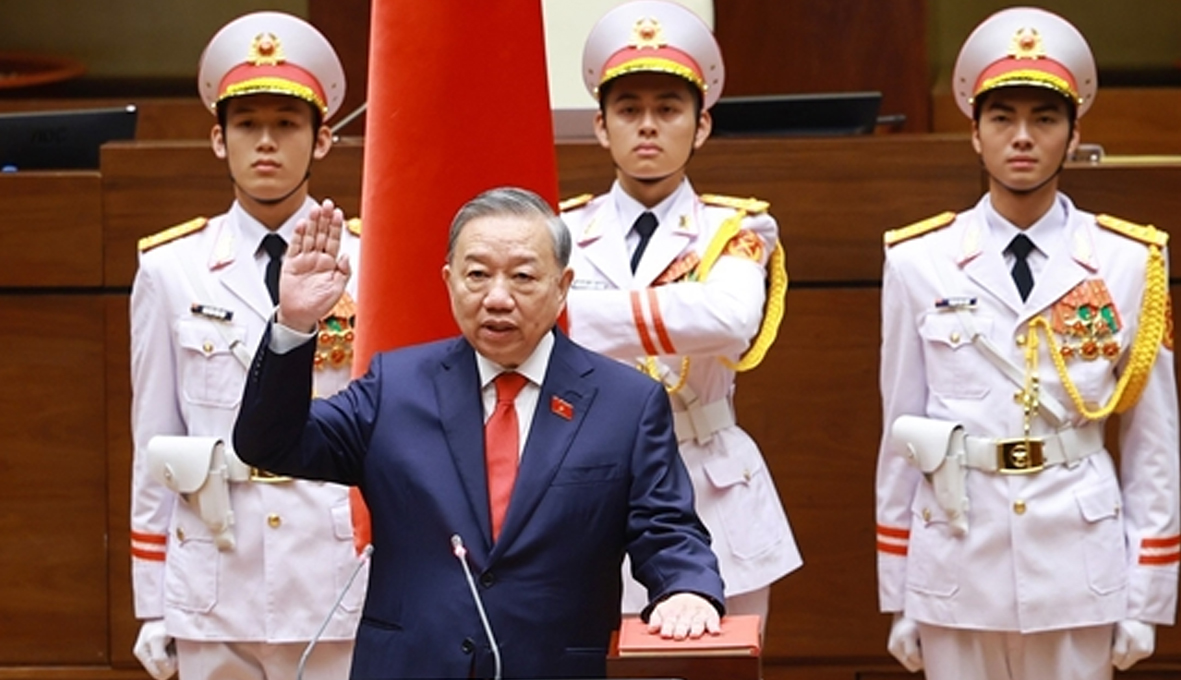
In Vietnam, following the death of General Secretary Nguyễn Phú Trọng in July 2024 and the appointment of Tô Lâm as successor, leadership changes have signalled consolidation of power within the party’s security apparatus.[ii] In November 2025, the Politburo announced new appointments, including General Trinh Van Quyet (from the army/police apparatus) as Chairman of the Party
Central Committee’s Commission for Information, Education and Mass Mobilisation, and Le Minh Tri as Permanent Vice-Chair of the Party Central Committee’s Commission for Internal Affairs.[iii] These appointments underline the growing influence of security-linked leaders alongside the confirmation of Tô Lâm solidifying his role as the preeminent leader, with the Politburo, Secretariat, and Central Committee reshuffled to ensure loyalty and faster policy implementation.
Similarly, in Laos, the Lao People’s Revolutionary Party (LPRP) conducted its National Congress and elections in early 2026 with Thongloun Sisoulith, Sonexay Siphandone and Xaysomphone Phomvihane re-elected as the State President, Prime Minister, and National Assembly Chairperson, respectively.[iv] Interestingly, Viengthong Siphandone, former president of the Supreme People’s Court, who is not a Politburo member, was elected as Vice President for the current term. This either signifies the LPRP’s continued political directions with no major changes for the next five years, or the LPRP simply strategically securing the country’s political certainty for the time being. The economic challenges facing Laos, including rising debt, external dependency, labour migration, and slow growth, are heightening the imperative for the party to demonstrate governance capability and legitimacy. Thus, like Vietnam, Laos is aligning institutional restructuring with a Party Congress.
Despite internal administrative restructures occurring at both executive and legislative bodies through merging ministries and parliamentary committees, respectively, Laos has levelled up on their women’s political representation. The recent electoral results suggested an increase in national women’s political representation to 29.71 per cent[v], almost hitting the 30 per cent national target for the first time, with 38 per cent of the women parliamentarians being elected for the first time. However, while the descriptive representation appears positive, there is more work to be done to leverage the substantive part of women’s political representation not only at the national level, but also at the sub-national (provincial) level.
Cambodia’s 2023 general election marked a major political transition, with Hun Sen transferring power to his son, Hun Manet. The Cambodian People’s Party (CPP) secured all 125 National Assembly seats, reflecting its continued dominance in the absence of viable opposition. Hun Sen now serves as President of the Senate while retaining leadership of the CPP.[vi] Despite this transition, women’s political representation remains limited. Women hold 13.6 per cent of seats as of January 2026, a decline from 21 per cent in 2020. In the Senate, women’s representation increased slightly to 19.4 per cent, with only three women serving as ministers[vii]. At the subnational level, only 10.7 per cent of commune chiefs are women, highlighting overall persistent gender inequality in Cambodia.[viii]
Institutional restructuring (ministries, administrative tiers)
In February 2025, Vietnam’s National Assembly issued Resolution 176/NQ-QH15[ix] calling for the restructuring of the political system and local government apparatus. Reforms implemented since July 2025 include a reduction from twenty-two to fourteen ministries and three ministry-level agencies, alongside the abolition of district-level administrative units in favour of a two-tier provincial–communal system.[x] Personnel changes, including appointments of security-linked leaders such as General Trinh Van Quyet and Le Minh Tri, further reinforce central control.[xi] Together with the leadership changes, these developments reflect a tandem approach, streamlining the state for improved performance and pre-empting potential instability, while strengthening the party’s centralised control. The shift towards fewer administrative levels and agencies enhances the capacity of the CPV’s centre to oversee policy, personnel and governance.
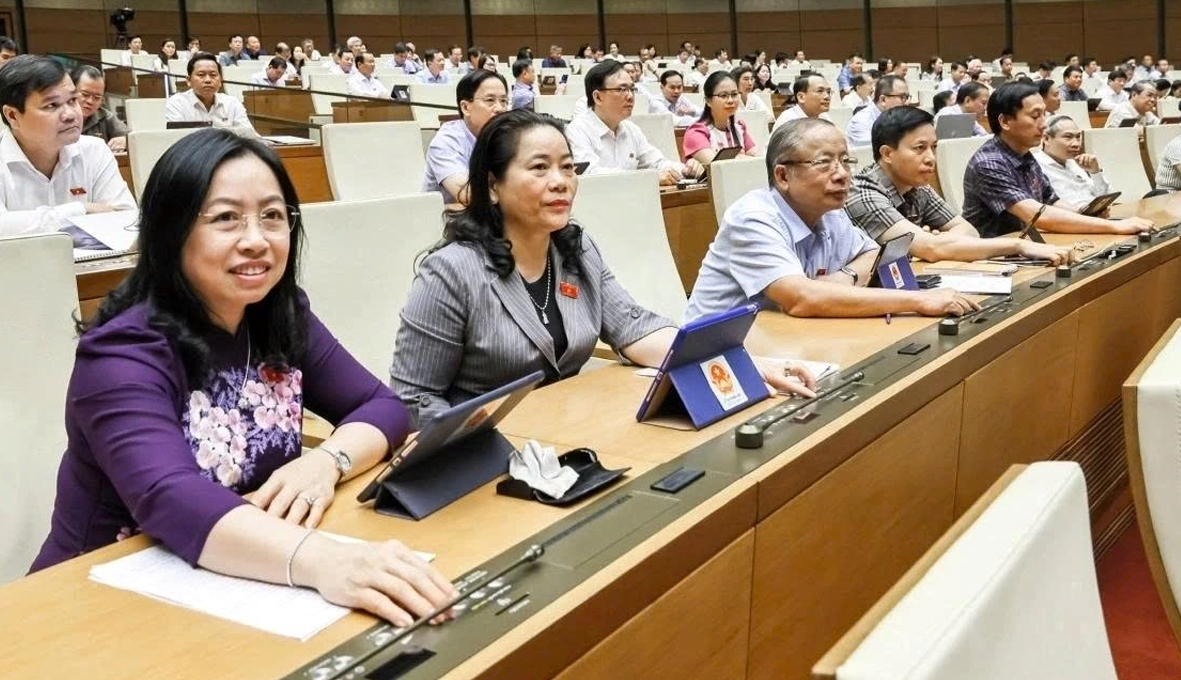
Similarly, in Laosin March 2025, a resolution-initiated restructuring focused on reducing ministries from seventeen to thirteen, including mergers of key institutions such as the Ministry of Planning and Investment and the Ministry of Energy and Mines.[xii] Likewise, the merging of parliamentary committees was also officialised following the inaugural session of the 10th legislature of the National Assembly of Laos in March 2026, reducing the number from nine committees to five committees and one parliamentary office.[xiii] These reforms prioritise organisational efficiency, cost savings, and leadership transition. Simultaneously, the re-establishment of the provincial people’s assemblies in 2021 and planned expansion below village levels are meant (or claimed) to decentralise and give more autonomy to local authorities. Decision-making authority is claimed to be increasingly decentralised, yet implementation at provincial and local levels remains challenging due to uneven capacity. Reduced administrative layers may exacerbate sub-national capacity constraints. In addition, administrative reforms aimed at efficiency occur alongside tighter political oversight. Regulatory reforms function as part of a broader governance approach that combines modernisation with control.
Cambodia is an elective constitutional monarchy where executive authority is shared between the Monarch and the Council of Ministers, led by the Prime Minister. Following the 2023 general election, the country underwent a major leadership transition, marked by the transfer of power from Hun Sen to his son, Hun Manet, and the launch of the “Pentagonal Strategy Phase I” to modernise state institutions. This restructuring involved elevating a younger, often Western-educated generation of successors under the age of 49 to replace senior ruling party officials. Notably, the new cabinet features extensive familial ties, with 20 of 28 ministries led by the children of previous incumbents, and the number of state secretaries has more than doubled to 1,422[xiv], an opposite trend to Laos and Vietnam.
Despite demographic shifts and formal administrative divisions between national and subnational levels, power in Cambodia remains highly centralised. Although the 2001 decentralisation reforms and subsequent functional transfer programs aimed to empower local governments, the central government continues to retain substantial political and fiscal control. As a result, subnational authorities have limited autonomy and depend heavily on central funding, with policy coordination often requiring direct intervention from the Prime Minister.[xv]
Regionally, political re-configuration in all three countries is shaped by strategic competition in mainland Southeast Asia. Vietnam is navigating complex relations with China, the United States, and Japan while seeking to maintain autonomy in the South China Sea. Laos and Cambodia, meanwhile, are increasingly embedded in China’s economic and strategic orbit, raising concerns about sovereignty, debt sustainability, and policy dependence. These external dynamics influence internal political decision-making, reinforcing the importance of party cohesion and regime resilience.
Overall, recent changes reveal how the three governments adjust political authority to maintain stability, manage elite competition, and assert ideological control. Reforms in both Laos and Vietnam reflect a dual strategy of improving state performance while reinforcing control. The shift towards fewer administrative layers enhances the capacity of central authorities to oversee policy, personnel and governance processes, while exposing capacity deficits at the sub-national level, particularly in Laos. In Cambodia, however, the number of state secretaries has doubled. The changes in the three countries reflect attempts to manage internal competition, assert ideological control, and maintain political order in rapidly shifting domestic and regional environments central to the next decade. These changes also directly impact state-civil society relations and impact broader developments.
Asymmetric state–civil society relations
Civil society across the Mekong region is progressively constrained, shaped by increasingly restrictive regulatory frameworks, shifts in international aid, and the strategic deployment of law to manage dissent. While countries such as Cambodia, Laos and Vietnam each have distinct systems, they share a broader trend, the use of administrative reform, legal mechanisms, and bureaucratic oversight to limit civic participation while maintaining the appearance of compliance with international development norms.
In Laos, regulatory reforms, notably the 2010 Decree on International Non-Governmental Organisations (INGOs) and the 2017 and 2025 Decrees on Non-Profit Associations (NPAs), were introduced under the banner of modernisation and improved governance while institutionalising state discretion, with extended approval timelines, intensified reporting requirements, and expanded monitoring provisions under the Criminal Code.[xvi] Cambodia’s 2015 Law on Associations and NGOs allows broad discretionary restrictions, while Vietnam maintains civil society within tightly controlled, state-aligned structures. INGOs generally retain greater operational space due to their technical and service-oriented focus, although delays persist in politically sensitive sectors. In contrast, national NGOs[xvii] face tighter restrictions, fragmentation, limited collaboration opportunities, and heightened competition for funding.[xviii]

International vs national NGOs
In Laos, INGOs and NPAs are clearly differentiated, where the former report to the Ministry of Foreign Affairs and the latter now reports to the Party Central Organising Committee. While the latest 2025 Decree on Associations (No.536/GoL) encourages Associations (NPAs) to collaborate with INGOs or international organisations to mobilise resources with no cap ceiling specified, associations are to register under the supervision of the Party Central Organizing Committee and may require the Ministry of Foreign Affairs to be involved in the approval processes, subject to sources of funding. This appears to limit NPAs’ independence, suggesting the government lacks confidence in their capability. The decree emphasises this hierarchy by imposing burdensome reporting requirements and creating competition among NPAs for funding, discouraging local coalition building.
In Cambodia, there are 347 INGOs and about 3500 LNGOs registered at the Ministry of Foreign Affairs and the Ministry of Interior, respectively, but only 21 per cent were reported to be fully functioning.[xix] This limited functionality reflects not only resource constraints but also a progressively restrictive operating environment alongside selective cooperation and partnership, particularly in the delivery of social services and poverty alleviation. Along with the political shift, state hostility towards civil society has intensified. Civil society is often perceived by the ruling Cambodian People’s Party (CPP) as aligned with opposition forces and a potential threat to regime stability. The government, therefore, adopts a dual strategy of repression and co-optation. Repressive measures include restrictive laws such as the Law on Associations and Non-Governmental Organizations (LANGO), alongside arbitrary detention and violence against activists.[xx] Consequently, advocacy NGOs working on sensitive issues, including human rights, land disputes, and environmental protection, are subject to surveillance and scrutiny of their political neutrality, while service-oriented organisations remain relatively tolerated. In addition, the government has taken repressive action against social media users. For example, during the recent border tensions between Cambodia and Thailand, more than 30 individuals, including opposition members, activists, and journalists, were detained under the Criminal Code.[xxi] Co-optation occurs through government-organised NGOs, state-aligned think tanks, and platforms such as the Civil Society Alliance Forum and Technical Working Groups, where CSOs have limited influence.
Vietnam, while permitting large national associations, ensures all operate within structures aligned with one-party control. Across all contexts, regulation is applied selectively, with groups supporting state development goals encountering fewer obstacles, while organisations engaged in advocacy, environmental justice, and rights, or human rights, face delays, harassment, or closure. These restrictions often emerge in tandem with economic reforms. Mekong governments are keen to attract foreign investment and demonstrate administrative modernity, yet they remain wary of civic groups that may link economic change to broader demands for accountability. This dynamic creates an asymmetrical relationship in which donors and INGOs are welcomed when providing technical assistance or delivering services, but discouraged when supporting rights-based programming.
Impact of shrinking aid budgets
Declining donor presence, including significant reductions by the world’s largest Official Development Assistance (ODA) providers, including USAID and European partners (particularly Germany, France and the UK), has intensified constraints. ODA to Southeast Asia is projected to fall by more than AUD 2 billion by the end of 2026, with bilateral aid declining from approximately AUD 11 billion in 2023 to AUD 9 billion in 2026.[xxii] Reduced, project-based funding tied to government endorsement further limits independent initiatives.
Cambodia is experiencing a significant contraction in external funding. ODA is projected to fall by approximately 20 per cent between 2025 and 2026, exacerbating vulnerabilities in the civil society sector heavily dependent on international financing and constrained by limited domestic resource mobilisation. NGO funding has dropped from USD 440 million in 2023 to around USD 330 million in 2025.[xxiii] The research data indicate that 26 per cent of NGOs may not remain viable beyond 2027, while nearly half have reduced services.[xxiv] This shift is driven by changing donor priorities. For instance, Sweden’s withdrawal of USD 13.6 million annually has placed over 60 organisations at risk, while the suspension of approximately USD 260 million from USAID has resulted in the termination of 30 programmes, particularly affecting health and education.[xxv] These cuts include USD 15 million for tuberculosis programmes and over USD 50 million in education-related support, undermining both immediate service provision and longer-term capacity development. These financial pressures underscore both declining organisational sustainability and the absence of coordinated long-term engagement between civil society and development partners.
Laos is currently focusing on the Smooth Transition Strategy (STS), planning to graduate from Least Developed Countries (LDC) status in November 2026. While Australia, through its Development Partnership Plan (2024–2029),[xxvi] is a major development partner together with other bilateral partners and remains strong in Laos, Laos is projected to experience further global ODA cuts by 13-25 per cent[xxvii] in 2025 from its incremental decrease of USD 649.71 million in 2022.[xxviii] This potentially impacts the country’s development aid beyond LDC graduation, particularly on trade, where Laos will lose access to duty-free, quota-free (DFQF) schemes for LDCs.
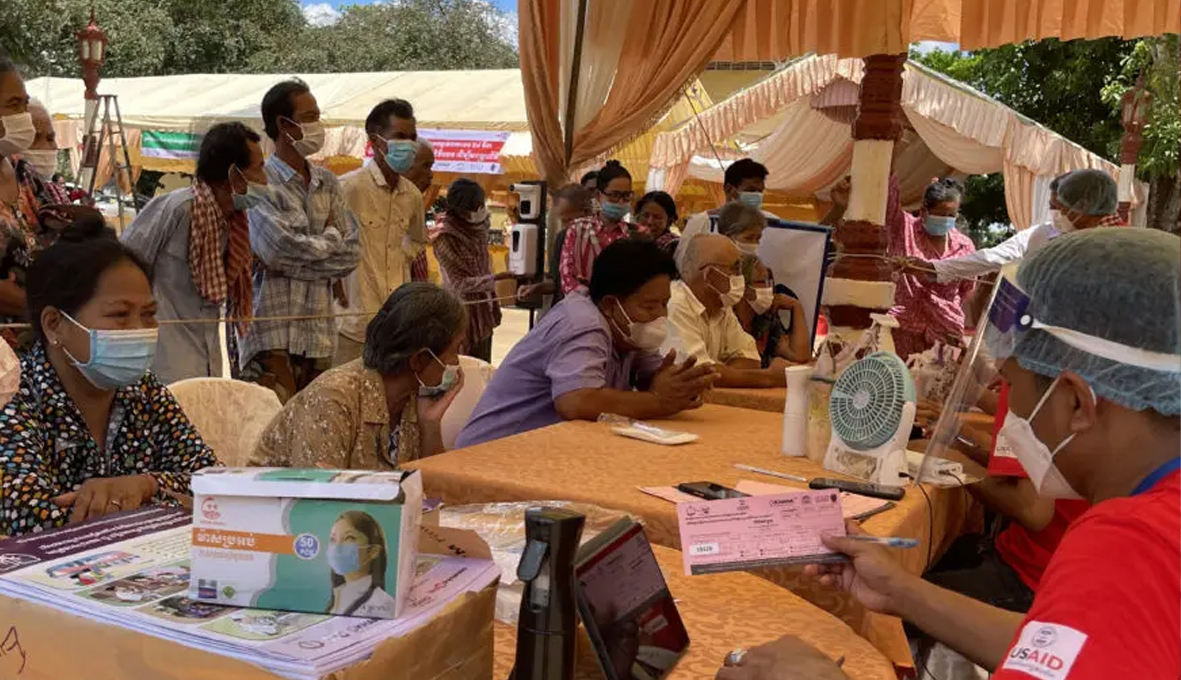
Aid reductions are weakening civil society ecosystems and reinforcing state-led development models. Donor engagement is increasingly channelled through government-approved mechanisms, limiting independent civic participation. These dynamics contribute to a gradual contraction of civic space characterised by self-censorship, weakened organisational capacity, and reduced advocacy. Decrees on INGOs and NPAs, initially framed as modernising reforms, now function as tools of political power.[xxix] These regulations keep local groups fragmented, underfunded and dependent on government goodwill. With major funding streams like USAID withdrawing from the region, this dependence has deepened, leaving domestic NPAs vulnerable to political pressure.
Some state actors justify these controls as protection against foreign interference, legitimising authoritarian consolidation and reinforcing distrust of civil society. Regulatory reforms evidently function as part of a broader authoritarian toolkit. They allow governments to appear cooperative with international partners, signalling that civil society is welcome while retaining ultimate control. The threat to NGOs’ legal status, funding and safety also creates a chilling effect, leading to self-censorship and discouraging work on government accountability. This dynamic demonstrates how legal regulation has become a defining feature of authoritarian resilience. Civil society actors increasingly shift towards service delivery roles aligned with state priorities, while advocacy, environmental accountability, and rights-based work face growing restrictions. Nevertheless, civil society organisations continue to manoeuvre within these restricted spaces where possible, working in constrained spaces and under persistent mistrust. Across the Mekong, governments paradoxically rely on civil society for development and legitimacy while fearing its potential to mobilise citizens and contest authority. Their solution, as seen in Laos, is not eradication but calibrated control.[xxx]
Why does this matter for Australia
While economic resilience, trade interruptions, energy transition and climate change are key challenges in the Mekong Region, leadership transitions, institutional restructuring, and evolving state–civil society relations are important to understand and adapt to, as these are the latent structural drivers underpinning long-term development, directly and indirectly impacting Australia.
For international actors, like Australia, the challenge is profound. Supporting civil society requires not only funding, but creativity in helping local groups build networks, leadership and resilience, while resisting the normalisation of restrictive laws disguised as ‘modernisation’. The regulatory story of the Mekong is not just about NGOs but about how authoritarian governments adapt in an era of global connectivity, using laws rather than force to maintain control. Recognising these developments across the Mekong region offers lessons for engagement and partnerships. Civil space rarely closes overnight; it erodes slowly through the quiet weaponisation of bureaucracy. The stakes extend beyond civil society to the region’s broader path of governance. If these patterns persist, the Mekong’s future will depend less on citizens’ dynamism than on state discretion.
The evolving governance landscape is becoming more politically sensitive, limiting traditional entry points for governance and civil society programming. There is reduced space for advocacy-oriented engagement, increasing the importance of sub-national engagement, technical cooperation and trusted, long-term partnerships. For development partners, including Australia, these dynamics require a rethinking of engagement models to stay relevant and a key partner. Traditional funding mechanisms that rely on formal registration, public advocacy, and detailed documentation are increasingly constrained. Donors must consider flexible, discreet, and locally grounded funding modalities such as strengthening informal networks, investing in organisational resilience, and sustaining diplomatic advocacy against restrictive legal reforms. In addition, regional networks, leadership development, and pooled funding arrangements may provide safer avenues for engagement. Effective support will depend on navigating political sensitivities while minimising risks to local actors.
Overall, the Mekong region exemplifies broader global shifts in which law, regulation, and bureaucracy are deployed and used to shape civic space. Civil society continues to play a meaningful role, but its capacity is contingent on politically adjusted engagement from international partners and the resilience of local actors in an increasingly restrictive environment.
Australia must navigate these dynamics carefully to remain an effective and credible partner while supporting inclusive governance outcomes. Strengthening civic space is critical not only for safeguarding fundamental freedoms but also for enhancing development effectiveness and promoting inclusive development. It further contributes to regional stability and provides a strategic avenue for engaging with the rise of authoritarianism, thereby reinforcing Australia’s diplomatic influence and soft power in the region, even more important today in the wake of simultaneous and unexpected aid cuts by key ODA providers. This will also ensure that Australia can utilise its development program as a source for regional comparative advantage and foreign policy influence achieving its broader goals of peace, stability and prosperity while ensuring it meets the objectives and aims of its current Australia–Southeast Asia Regional Development Partnership Plan, including supporting locally led efforts to drive change by taking a more flexible and innovative approach to program planning and implementation, providing ongoing and reliable funding commitment, and capacity development to local organisations while supporting local civil society organisations.[xxxi]
Conclusions and key recommendations
As the Mekong region continues to evolve, its role in shaping Southeast Asia and beyond will become more evident. Addressing under-recognised structural and institutional dynamics – leadership transitions, institutional restructuring, and state–civil society relations – is essential, as these shape the enabling conditions for the region’s long-term development trajectories and inform priorities for the coming years. Institutional restructuring and leadership transitions are reinforcing control while civic space continues to narrow under regulatory and financial pressures.
For Australia, effective engagement will require flexible, context-sensitive approaches that strengthen governance capacity, support resilient civil society actors, and sustain meaningful partnerships in an increasingly constrained environment to ensure Australia continues a positive and valued relationship while contributing to achieve a sustainable, inclusive, and economically prosperous subregion with the ability to accelerate growth and progress for its population and beyond. This will also ensure that Australia can utilise its development program as a regional comparative advantage and foreign policy influence and achieve its broader goals on peace, stability and prosperity.
Key recommendations include:
- Prioritise political and institutional reform as core development investments, not peripheral concerns, by redirecting funding towards initiatives that strengthen accountability, leadership transitions, and state–society relations.
- Support and strengthen politically informed engagement that strengthens sub-national governance and service delivery, even where sensitivities persist.
- Invest in long-term, locally embedded civil society ecosystems, moving beyond short-term project cycles to sustained partnerships that build resilience, legitimacy, and policy influence.
- Position Australia as a normative leader in the Mekong, aligning aid, diplomacy, and regional engagement to actively shape more inclusive and participatory governance trajectories by actively shaping legal frameworks that enable inclusive development, rather than passively working within constrained systems.
- Invest in digital government platforms that reduce discretion, expose inefficiencies, and institutionalise accountability.
- Australia must stabilise and, where strategic, increase Mekong funding to avoid signalling retreat amid intensifying geopolitical competition and unprecedented aid cuts.
- Make civic space a non-negotiable pillar of engagement, embedding expectations on participation, transparency, and access to information across all Australian-supported programmes.
About the authors

Andrea Haefner
Dr Andrea Haefner (SFHEA) is the Southeast Asia Hub Lead and a Senior Lecturer at the Griffith Asia Institute at Griffith University. Andrea has 20 years of experience working with academia, government, and international organisations across Australia, Germany, and Southeast Asia, especially the Mekong region. Andrea’s research focuses on civil society, water governance and transboundary river basins in the Mekong region. Besides publishing several peer-reviewed articles, Andrea’s book on Negotiating for Water Resources – Bridging Transboundary River Basins was published with Routledge. Andrea also focuses on impact research and policy relevance, while leading capacity building programs and working alongside governments to improve legislation.

Dr Nay Kim
Dr Nay Kim is a researcher focusing on social accountability in Southeast Asia. Nay completed her PhD at Griffith University in 2025 titled ‘Social Accountability in Fighting Corruption in Southeast Asia: The Case of Cambodia, Indonesia and The Philippines’. Alongside research, Nay conducts consultancy work and has extensive experiences working with INGOs in Cambodia.
Phetmany Xaychaleune
Phetmany Xaychaleune is a researcher from Laos with extensive work experience in INGOs. Phetmany is currently conducting her PhD studies at the University of Queensland focusing on the role of women in politics with a comparative focus on Laos and Vietnam.
Notes and references
[i] Po, S and Haefner, A (2025) Emerging political, economic and social transformations in Southeast Asia, Griffith Asia Institute, https://doi.org/10.25904/1912/5865
[ii] Poling, G B (2024) The Passing of Vietnam Party Chief Nguyen Phu Trong, https://www.csis.org/analysis/ passing-vietnam-party-chief-nguyen-phu-trong
[iii] Vietnam Law & Legal Forum (2025) Party General Secretary presents Politburo decisions on personnel work, 4 November 2025, https://vietnamlawmagazine.vn/party-general-secretary-presents-politburo-decisions-on-personnel-work-75747.html
[iv] The Diplomat (2026, 1 April). Why Laos’ Communist Party Chose Continuity. https://thediplomat.com/2026/04/why-laos-communist-party-chose-continuity/
[v] Vietnam Plus (2026, 3 March). Laos announces results of 10th National Assembly election. https://en.vietnamplus.vn/laos-announces-results-of-10th-national-assembly-election-post338576.vnp?utm_source=chatgpt.com
[vi] CNN. (2023, 23 July). Cambodia’s Ruling Party Claims Landslide Win in One Side Election. Cambodia’s ruling party claims landslide win in one-sided election | CNN
[vii] UN Women. (2025). Situation Analysis Report on Women, Peace and Security in Cambodia. https://asiapacific.unwomen.org/sites/default/files/2025-11/kh-20250438381-situation-analysis-report-on-wps-in-cambodia_en-s.pdf
[viii] UN Women. (2025). Women Political Leader 2025. https://www.unwomen.org/sites/default/files/2025-06/poster-women-political-leaders-2025-en.pdf
[ix] Government of Vietnam (2025) Resolution No. 176/2025/QH15, https://datafiles.chinhphu.vn/cpp/files/vbpq/ 2025/02/176-qh.signed.pdf
[x] APOLAT (2025) Resolution No. 60-NQ/TW on the eleventh plenum of the 13th central committee of the communist party of Vietnam, https://apolatlegal.com/laws/resolution-no-60-nq-tw-on-the-eleventh-plenum-of-the-13th-central-committee-of-the-communist-party-of-vietnam/
[xi] Vietnam Law & Legal Forum (2025) Party General Secretary presents Politburo decisions on personnel work, 4 November 2025, https://vietnamlawmagazine.vn/party-general-secretary-presents-politburo-decisions-on-personnel-work-75747.html
[xii] LPDR (2025). Resolution on Organizational Restructuring (No. 03/CEC), 12 March 2025, Organisational-Restructure-of-GoL.pdf; Nishizawa, T (2025) Laos’s reforms set the stage for leadership transition, East Asia Forum, 11 November 2025, Laos’s reforms set the stage for leadership transition | East Asia Forum
[xiii] Phouthen Pasaxon News (2026, 23 March) https://www.facebook.com/Phouthen ຮັບຮອງການເລືອກຕັ້ງຕຳແໜ່ງສໍາຄັນ ແລະ ໂຄງປະກອບກົງຈັກການຈັດຕັ້ງອົງການອໍານາດລັດ – Endorsement of State Personnel and Organisational Structure.
[xiv] CamboJA news. (23 August 2023). New government more than double secretary and undersecretary of state position in the Ministries. https://cambojanews.com/new-govt-more-than-doubles-secretary-and-undersecretary-of-state-positions-in-ministries/
[xv] Bertelsmann Stiftung. (2026). Country Report: Cambodia. https://www.ecoi.net/en/file/local/2138413/country_report_2026_KHM.pdf?
[xvi]LPDR. (2010, 8 January). Decree on International Non-Governmental Organizations (INGOs) (No. 013/PM). Prime Minister’s Office; LPDR. (2009, 29 April). Decree on Associations (No. 115/PM). Prime Minister’s Office. LPDR. (2017). Penal Code (No. 13/2017), https://www.wipo.int/wipolex/en/legislation/details/20158
[xvii] Overall, the paper refers to national NGOs when referring to all national civil society actors across the Mekong region. However, in specific country contexts, the relevant appropriate wording is used. National NGOs are referred to as Non-Profit Associations (NPAs) in Laos and as local NGOs (LNGOs) in Cambodia while in Vietnam civil society organisations (CSOs) is used. For more see: Haefner, A (2025a) The State and Civil Society in Laos: Asymmetry and Symbiosis, Asian Studies Review.
[xviii] Haefner, A (2025a) The State and Civil Society in Laos: Asymmetry and Symbiosis, Asian Studies Review.
[xix] JICA, (2025). Cambodia NGO Handbook 2025. https://www.jica.go.jp/english/overseas/cambodia/office/about/ngodesk/__icsFiles/afieldfile/2025/04/04/NGO_HB_A_EN_.pdf
[xx] Curley, M. (2018). Governing civil society in Cambodia: implications of the NGO law for the “rule of law”. Asian Studies Review, 42 (2), 247–267. doi:10.1080/10357823. 2018.1457624
[xxi] CamboJA (2026). Over 30 Arrested Since July for Border Clash Comments. https://cambojanews.com/over-30-arrested-since-july-for-border-clash-comments/?utm_source=chatgpt.com
[xxii] Dayant, A et al (2025). Southeast Asia AID Map 2025 Key Findings Report, Lowy Institute, https://seamap.lowyinstitute.org/assets/downloads/Lowy%20Institute%20Southeast%20Asia%20Aid%20Map%20-%202025%20Key%20Findings%20Report.pdf?utm_source=chatgpt.com; Freeman, N J. (2025). US AID Cuts and Travel Ban Will Impact Laos, 25 April 2025, https://fulcrum.sg/us-aid-cuts-and-travel-ban-will-impact-laos/
[xxiii] Council for the Development of Cambodia. (2025). Development Cooperation and Partnership Report. http://cdc-crdb.gov.kh/en/officials-docs/documents/FINAL%20DCPR%202025%20with%20Signature%20(EN%2016%20June%202025).pdf
[xxiv] Cooperation Committee for Cambodia. (2025). CSO Roadmap 2025-2028. https://www.ccc-cambodia.org/kh/resource/online-library
[xxv] CamboJAnews. (2026, 3 March). Cambodia’s Civil Society Is Being Stress Tested- A New CSO Ecosystem is Needed. https://cambojanews.com/op-ed-cambodias-civil-society-is-being-stress-tested-a-new-cso-ecosystem-is-needed/
[xxvi] Government of Australia (2024). Australia-Laos Development Partnership Plan 2024–2029. https://www.dfat.gov.au/sites/default/files/australia-laos-development-partnership-plan-2024-2029.pdf
[xxvii] OECD (2025), Cuts in official development assistance: OECD projections for 2025 and the near term, OECD Policy Briefs, No. 26, OECD Publishing, Paris, https://doi.org/10.1787/8c530629-en.
[xxviii] Official Development Assistance (ODA) Snapshot Report for Lao PDR (2019-2022). https://rtm.org.la/wp-content/uploads/2024/11/Draft-report-Official-Development-Assistance-06112024.pdf
[xxix] Haefner, A (2025b) Regulation tightens around civil society in the Mekong Region, East Asia Forum, 28 November 2025, https://eastasiaforum.org/2025/11/28/regulation-tightens-around-civil-society-in-the-mekong-region/.
[xxx] Ibid.
[xxxi] Department of Foreign Affairs and Trade. (2023). Australia’s International Development Policy. Canberra, ACT; Department of Foreign Affairs and Trade. (2024). Australia–Southeast Asia regional development partnership plan 2024–2028. Canberra, ACT.