Remembering Colin Mackerras: A shared commitment to Australia–China understanding and friendship
JOCELYN CHEY |
My life and career have paralleled and in some senses complemented Colin’s. I am very happy to have known him and his family and to have shared his passionate devotion to building understanding and friendship between Australia and China. Our paths crossed on several occasions and even when we were distant, we worked towards the same objective.
In 1964, I was working in Hong Kong when I met and married Moon Lin Chey. That same year Colin and Alyce made their first visit to China. I had known Alyce when we were both students at the University of Sydney. She met Colin when she went to Cambridge University after graduation. Their move to Beijing in 1964 was brave. That was the year that Mao Zedong launched the Socialist Education Movement (also known as the “Four Clean-ups” to purge reactionary and capitalist-leaning members from the Communist Party), and the domestic political scene was fraught. It presaged the outbreak of the Great Proletarian Cultural Revolution the following year. In 1966, my husband and I decided to leave Hong Kong for Sydney. Colin and Alyce also decided to leave China and moved to Canberra. Colin and I then both embarked on doctoral studies. I worked on the history of Chinese materialist philosophy, and he researched the history of Peking Opera, both completing our theses in the same year, 1969.
Since the end of the Second World War, when Australia had been forced to take a deep interest in Japan and Japanese politics, Australian universities had developed an interest in the cultures and history of their Asian neighbours. The University of Sydney was the pioneer in Chinese Studies, closely followed by the Australian National University and the University of Melbourne. The small community of “China scholars” in the three locations knew each other’s work and developed collegial relationships. I first met Colin when I visited Canberra as a postgraduate student at this time.
The 28th International Congress of Orientalists that met at the ANU in January 1971 brought together a thousand scholars from around the world and across Australia, and established the credentials of Australian scholarship in Asian Studies. My professor, AR Davis, was on the conference organising committee and edited the publication of the proceedings. With his encouragement, I travelled to Canberra and presented a paper at the Congress based on my doctoral research on Chinese historiography.
The Cultural Revolution had broken out in China in 1966, and although its chaos had not extended to Australia, there were violent political currents that impacted academic work. Australian young men were being conscripted to fight in Vietnam and police were pursuing conscientious objectors and anti-war demonstrators across university campuses, particularly the University of Sydney. Public opinion was turning against the Menzies government and its pro-American policies. At the same time, no one knew what was happening in China, the only source of information being stale government publications such as the Red Flag journal and its turgid Party-speak adumbrations. In 1970 the internationally feted author Han Suyin, star of the movie Love is a Many Splendored Thing, visited Australia. She painted an enticing picture of a vibrant and progressive New China and the Cultural Revolution as a rightful grassroots shake-up of bureaucracy. She spoke to a rapturous audience in Sydney and was very convincing. On the other hand, Belgian-born sinologist ANU Lecturer Pierre Ryckmans published “The Chairman’s New Clothes” in 1971, a seminal work exposing the atrocities of the Cultural Revolution, the totalitarianism and tyranny of Mao Zedong and China’s romanticisation in the West.
In this maelstrom of public opinion, Colin and I strove to find a middle ground. Both of us had devoted years to learning Chinese language and to studying China’s history and culture. We knew that Australia’s future would increasingly be tied to that of China and the rest of Asia. We knew from firsthand that China’s political system had deep faults and problems and that positive-sounding Maoist slogans such as “Serve The People” could not be taken at face value. We also knew a lot about the chaos and corruption that had preceded China’s Communist Revolution, and we thought that, as far as Australia was concerned, there was more to be gained from engagement than from disengagement. We did not have the opportunity to discuss these matters in person, but, from later conversation, I know that we reached similar conclusions and made similar life choices based on our convictions.
For me, this led to a career in government, where I worked on various aspects of Australia-China relations. For Colin, it led to a life in academia and teaching and research based in universities in both countries. In 1974 he moved to the new campus of Griffith University as the Foundation Professor of Asian Studies. Credit for this appointment should be given to then Vice Chancellor John Willett. John Willett had led a pioneering academic delegation to China in 1973 that included the University Chancellor Sir Theodore Bray. Willett was truly a pioneer of Asian Studies in Australia and an educational innovator in his introduction of theme-based university structures that underpinned the development of modern Asian Studies in Australia.
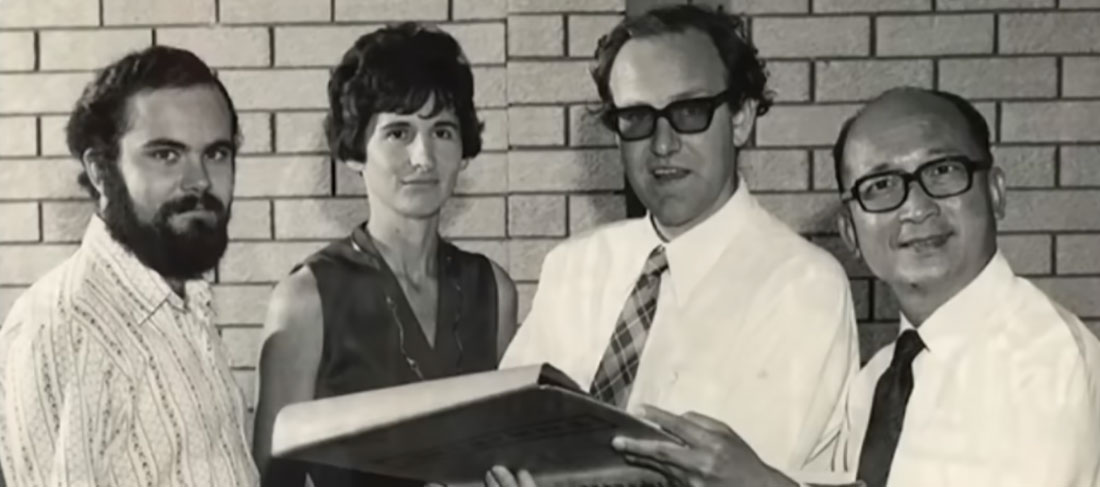
In 1979 I was appointed the first Executive Director of the Australia-China Council in Canberra, with eminent historian Geoffrey Blainey as Chair and John Willett as one of the Councillors. This Council was charged with advising the Australian Government on the development of relations with China and with encouraging greater knowledge of each country in the other. It became the ACC’s practice to hold meetings interstate and one of the first meetings was on Griffith campus at Mt Gravatt. In these years I worked closely with Colin and with VC John Willett, engaging in wide-ranging discussions of how to develop meaningful and impactful programs.
One early program funded by the ACC was proposed and delivered by Colin’s wife Alyce, Peter Chang of Griffith University and other authors, being the development of a series of Chinese language textbooks and other resources for use in Queensland schools – Hanyu for beginners, intermediate and advanced learners. Prior to these texts, teachers had to rely on imported books from China, the US or Europe that were not suited to the Australian educational system. The impact of the new teaching resources was quickly felt, with increasing numbers of students enrolling in school courses and many progressing to higher studies. This was a significant step forward in Australia-China relations and it was a pleasure for me to be able to build collegial relations with Colin through this period.
After this time, I worked in Beijing and Hong Kong for more than a decade, while Colin remained in Brisbane, but then I took early retirement and settled in Sydney, renewing my connection with my alma mater, the University of Sydney. Colin retired from Griffith University in 2004 and was appointed Emeritus Professor. He was appointed an Officer of the Order of Australia in 2007. I was appointed a Member of the Order of Australia in 2009. The citations for both of us noted our contribution to friendship and understanding between Australia and China. Both Colin and I were also awarded an ACC Medal for our work.
In this century, China has emerged onto the world stage. It is Australia’s biggest trade partner. The bilateral relationship is dominated by economics, defence, security and technology. What is often overlooked are the cultural and education links between the two countries. Colin appreciated the importance of language and history studies for a deep understanding of China today, and this is a point of view that I shared with him.
It was because of this appreciation of the importance of arts and culture that in 2016 I accepted the invitation to help establish the Australia-China Institute for Arts and Culture at Western Sydney University. Colin was very supportive of the work of the Institute and in 2021 he gave a talk there on the history of Peking Opera to mark the Lunar New Year.
I invited Colin to contribute to a collection of twelve short essays on China and Australia-China relations that I compiled for publication in the influential online public affairs journal Pearls and Irritations in 2019 under the banner title What Why and How China. The series was republished in 2020 by the Institute for Australia-China Relations at the University of Technology Sydney. The aim was to dispel some of the prevalent anti-China feeling and talk of a “China threat” common in the mainstream media. Colin’s essay concerned the status of religion in China. He noted that “Religious believers … can certainly practise their faith freely and openly, provided the government does not see any threat to state power or security.” Typically, his comments were based on sound research and personal observation, referring not only to general observations by foreign observers but also to the Chinese government’s concerns and policies.
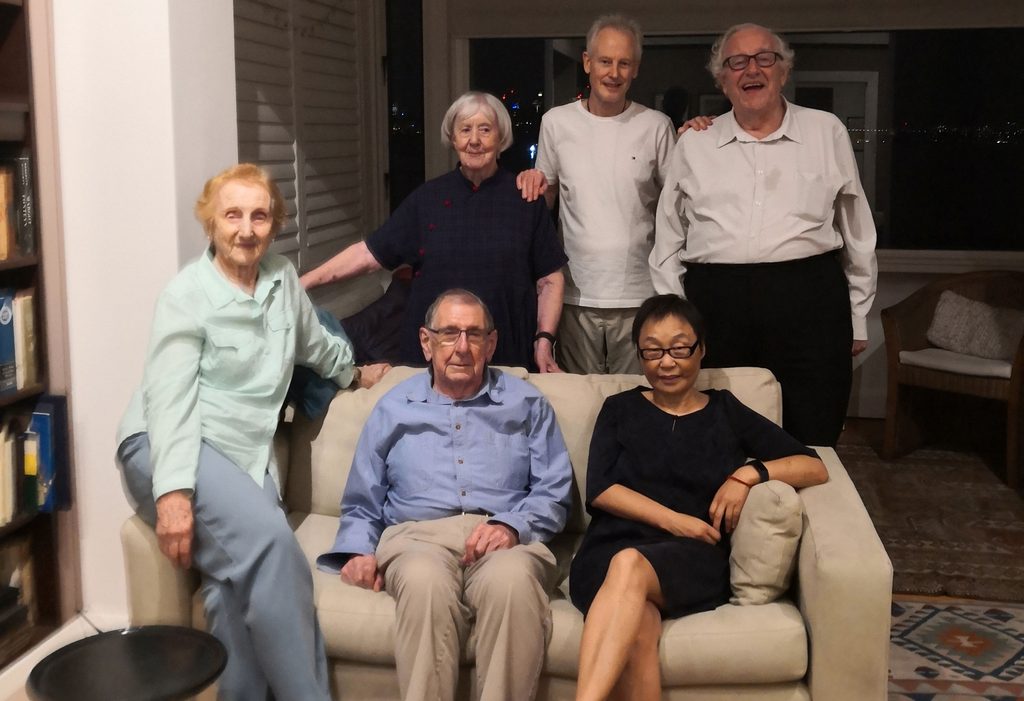
My most recent interactions with Colin related to our common interest in classical Western music. The Mackerras family is well-known in musical circles and Colin himself was immensely knowledgeable and passionate, particularly concerning the works of Gustav Mahler. On an earlier visit to Beijing, I had accompanied him to a performance by the China National Symphony Orchestra, and we had made arrangements to meet in Sydney in August 2026 for a performance of works by Shostakovich and Stravinsky to be conducted by his nephew Alexander Briger. Unfortunately, his health prevented his attendance.
Henry Longfellow said, “Music is the universal language of mankind”. Colin’s own life and work were, in this sense, a great symphony.
AUTHOR
Jocelyn Chey AM is an Honorary Professor at the University of Sydney, Visiting Professor at University of Technology Sydney, and Visiting Professor at Western Sydney University.