Bruce Miller AO, is the Chair of the Griffith Asia Institute Advisory Council. He was Australia’s former Ambassador to Japan, draws out the domestic policy implications for Australia of the slapdash and reckless COVID19 responses of Britain and the United States. And suggest for the examination of other policy models in Asia or continental Europe. Read More
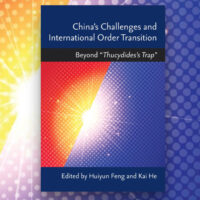
The aim of the book is to broaden the debate beyond the “Thucydides Trap” perspective currently popular in the West. Rather than offering a single argument, this volume offers a platform for scholars, especially Chinese scholars vs. Western scholars, to exchange and debate their different views and perspectives on China and the potential transition of international order. Read More
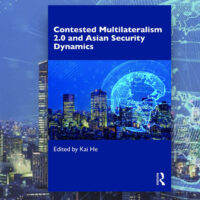
Kai He and his contributors debate the reasons for this contested multilateralism and the impacts it will have on the region’s security and political challenges. Using a diverse range of theoretical and empirical perspectives, these leading scholars contribute views on the diverse multilateral strategies of the great and middle powers in the region. As in other edited volumes, there is no one consensus argument shared among the contributors. Instead, the authors represent diverse IR theoretical approaches, different methodologies, and competing conclusions. Read More
The doyen of Australian journalists covering China, the New York Times’ correspondent Chris Buckley — a doctor of philosophy from the Australian National University — has just been booted out of the People’s Republic of China. Griffith Asia Institute Industry Fellow, Rowan Callick shares his insights Read More
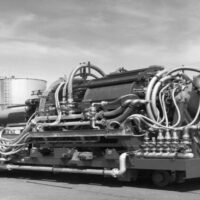
Russia’s testing of an SSC-X-9 Skyfall hypersonic weapon has rekindled interest in a largely forgotten Cold War technology: nuclear-powered air power. In this article, Peter Layton looks at the history of US development of nuclear-powered weapons in the 1950s and 1960s. In doing so, he highlights that successful innovation does not necessarily require a system to be operationally fielded. Read More
The perils of anarchy, the failure of global governance and the tragedy of great power rivalries explain why the world is feckless in coping with the pandemic says Griffith Asia Researcher, Kai He Read More
Our research focuses on the trade and business, politics, governance, security, economies and development of the Asia Pacific and their significance for Australia. Griffith University is committed to advancing Sustainable Development Goals (SDGs) across the region.